Tinnitus Treatment: Evidence-Based Options That Work
DEB's Audiology & Hearing Care
By DEB’s Audiology Team – March 2026 – 12 min read
More than 1 billion young people worldwide are at risk of hearing loss from unsafe listening practices. In India, specialists estimate that 41% of teenagers already show signs of hearing damage linked to earphone use. The damage is permanent. And it is largely preventable.
This article covers:
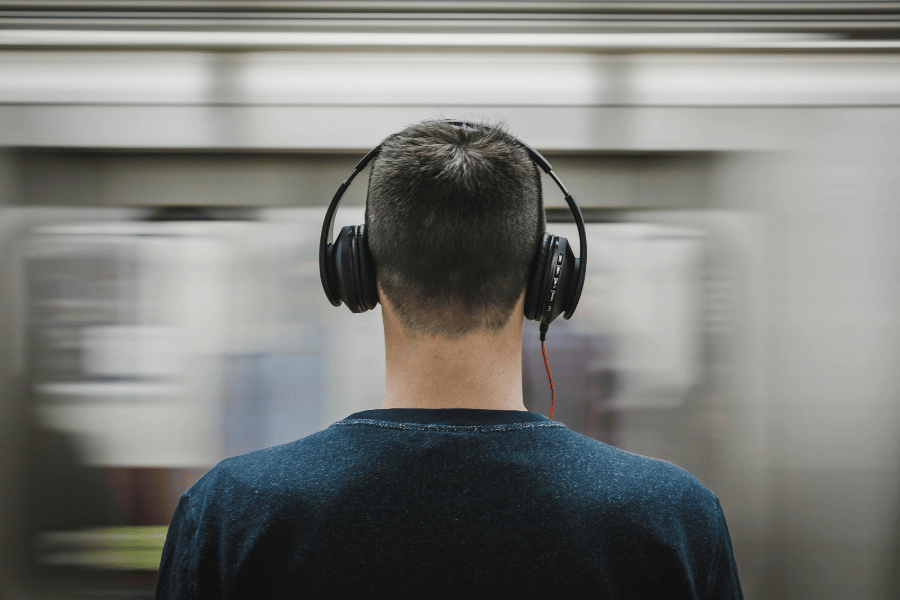
Earphones are everywhere. On the Mumbai Metro, in offices, at home, at the gym. They are how most people under 40 consume music, podcasts, calls, and online content for hours every day. They are also, when used at high volumes over time, a reliable route to permanent hearing damage.
In India, ENT specialists are reporting a sharp rise in noise-induced hearing loss cases among young people. Studies indicate that 41% of Indian teenagers already show signs of hearing damage linked to earphone use. The damage, once done, cannot be reversed. But it can be prevented.
Sound is measured in decibels (dB). The higher the decibel level, the more intense the sound — and the less time it takes to cause damage. The inner ear contains thousands of microscopic hair cells inside the cochlea that convert sound vibrations into electrical signals for the brain. Loud sound physically damages these cells. They do not regenerate.
This is called noise-induced hearing loss (NIHL). Unlike the sudden hearing loss that can follow a single extremely loud event — an explosion, a gunshot nearby — headphone-related NIHL is cumulative. It builds gradually, in small increments, over months and years of unsafe listening. There is no single moment of damage, which is why people rarely notice it happening until it is well advanced.
The damage typically begins at high frequencies — the 4,000 Hz range — which affects the ability to distinguish consonants in speech. People describe it as sounds becoming less clear, voices seeming to mumble, and difficulty following conversations in noisy environments. Tinnitus — a persistent ringing or buzzing — is often the first symptom they notice.
At the same volume setting, earbuds deliver more sound pressure to the eardrum than over-ear headphones. This is because they sit directly in the ear canal, closer to the eardrum, with less distance for the sound to dissipate. Research indicates earbuds increase sound pressure at the eardrum by approximately 6 to 9 decibels compared to over-ear headphones at the same device volume level.
This matters significantly. An increase of 6 dB halves the safe listening time. A 9 dB increase reduces it by more than two thirds. Someone who thinks they are listening at a safe volume on their earbuds may actually be receiving a substantially higher dose of sound than they realise.
In-ear monitors (the deeper-fitting earbuds used by musicians and audiophiles) present a similar risk profile. Any device that delivers sound directly into the ear canal at high volumes carries this concern.
The WHO and international standards bodies define safe listening levels in terms of both volume (decibels) and duration. The key reference points are:
85 dB: The maximum recommended continuous exposure level for an 8-hour period. This is roughly the volume of heavy city traffic.
80 dB: WHO’s recommended maximum for personal audio device listening for up to 40 hours per week. This is roughly the volume of a busy restaurant.
As volume increases, safe duration decreases: At 88 dB, safe exposure drops to 4 hours. At 94 dB, it drops to 1 hour. At 100 dB — a level easily reached on a smartphone at 70–80% volume — safe exposure is just 15 minutes.
A practical check: if you can’t hear someone speaking at arm’s length from you while wearing headphones, the volume is too high.
The 60/60 rule is the simplest safe listening guideline to remember and apply: listen at no more than 60% of your device’s maximum volume, for no more than 60 minutes at a stretch before taking a break.
It is not a precise scientific formula, but it is a practical and effective habit. At 60% volume on most modern smartphones and audio devices, sound levels remain below the 80 dB threshold in most listening environments. Regular breaks allow the ear’s hair cells a recovery period after sound exposure.
Most smartphones and music apps now include built-in listening time and volume tracking, along with notifications when safe exposure limits are being approached. Enabling and acting on these notifications is one of the most straightforward protective steps available.
Mumbai’s ambient noise levels are among the highest of any city in India. The local train network, road traffic, construction, and densely populated public spaces routinely expose residents to background noise of 80 to 100 dB — levels that would be considered unsafe as sustained occupational exposure.
When commuters use earphones in this environment, they face a specific risk: the background noise is loud enough that to hear music or speech clearly, they automatically increase the volume. This is called the Lombard effect, and it is involuntary. The result is that earphone volume levels during Mumbai commutes are frequently significantly higher than users intend or are aware of.
Noise-cancelling headphones are the most effective solution to this problem — see below. In their absence, over-ear headphones that provide passive noise isolation are substantially safer than earbuds in high-noise environments.
Noise-induced hearing loss from headphone use is largely silent in its early stages. By the time it is noticeable in everyday listening, it has usually been developing for years. The warning signs to watch for include:
Temporary tinnitus or muffled hearing after a loud listening session is a warning sign, not a normal experience. It indicates that the hair cells have been stressed and need time to recover. Repeated stress of this kind causes permanent cumulative damage.
If any of these signs are familiar, a hearing assessment is warranted. Many people in their 20s and 30s are surprised to find audiometric evidence of high-frequency hearing loss they had not consciously noticed.
Active noise-cancelling (ANC) headphones use microphones and processing to electronically reduce background noise before it reaches the ear. This means users can hear their audio clearly at substantially lower volume levels — which is genuinely protective.
However, noise-cancelling headphones do not protect hearing if the user then turns the volume up to the same level they used without noise cancelling. The protection is in the ability to listen at lower volumes — not in the technology itself.
Used correctly — with volume reduced to take advantage of the quieter acoustic environment — ANC headphones are the single most effective consumer choice for reducing hearing damage risk in noisy environments like the Mumbai commute.
Hearing damage from headphone use is entirely preventable. The habits above, applied consistently, protect the hearing you have now and reduce the risk of progressive loss over time.
If any of the warning signs sound familiar, or if you listen regularly at high volumes and have not had a hearing check recently, a brief assessment will give you a clear picture of where your hearing is now.
Click to Chat