

Headphones and Hearing Loss: How to Listen Safely
DEB's Audiology & Hearing Care
By DEB’s Audiology Team – March 2026 – 12 min read
Dizziness, vertigo, and balance problems are among the most common complaints affecting adults over 40 — and among the most frequently mismanaged, because the cause is rarely investigated properly.
This article covers:
The key takeaway: Dizziness and vertigo are not conditions to manage with rest or medication alone. A proper vestibular assessment identifies the cause — and the right cause leads to the right treatment.
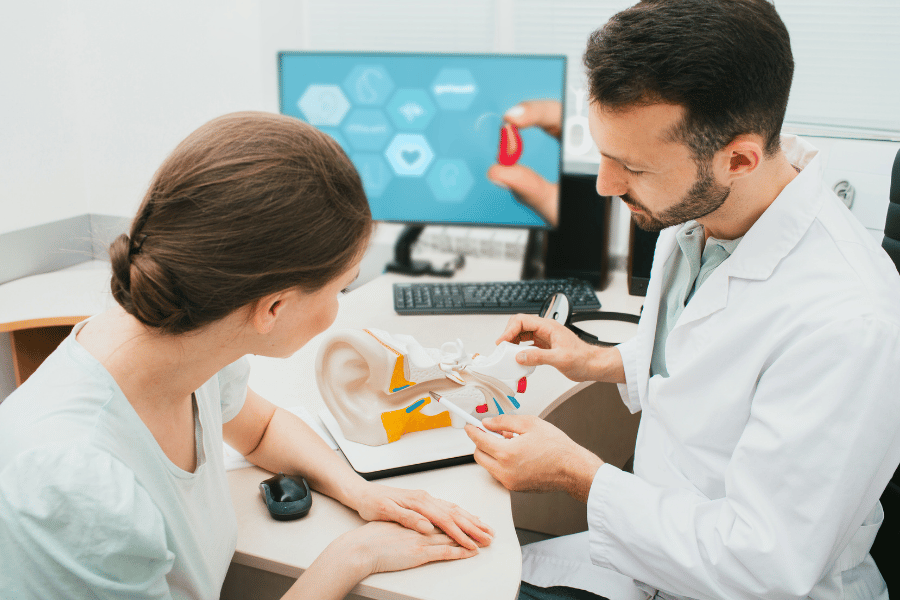
Dizziness and balance problems are common — but common does not mean normal, and it certainly does not mean untreatable. For a significant proportion of people experiencing vertigo, persistent dizziness, or unexplained falls, the cause lies in the vestibular system: the balance mechanism of the inner ear.
A vestibular assessment is the diagnostic process that investigates that system directly. This article explains what it involves, what to expect, and why getting the right diagnosis matters.
The vestibular system is the body’s primary mechanism for detecting movement, orientation, and balance. It works constantly in the background, sending signals to the brain about the position and motion of your head so your body can maintain stability and your vision can stay clear when you move.
It consists of three semicircular canals and two otolith organs inside each inner ear. When this system is disrupted — by displacement of calcium crystals, inflammation, infection, or nerve damage — the brain receives conflicting signals. The result is the sensation of spinning, tilting, or instability that characterises vestibular disorders.
Because the inner ear also contains the cochlea (the hearing organ), vestibular disorders frequently co-exist with hearing symptoms. This is why audiologists with vestibular specialisation — rather than general practitioners alone — are best placed to assess and manage these conditions.
A vestibular assessment is recommended for anyone experiencing dizziness or balance problems that are persistent, recurrent, or significantly affecting daily life. You may benefit from one if you experience any of the following:
These symptoms can have multiple causes — some straightforward and quickly resolved, others requiring more involved management. A structured vestibular assessment is the only reliable way to distinguish between them.
If your dizziness is sudden and severe, accompanied by severe headache, slurred speech, facial drooping, or difficulty walking, seek emergency medical attention immediately. These may indicate a stroke, not a vestibular disorder.
A comprehensive vestibular assessment is not a single test — it is a structured battery of evaluations that together build a complete picture of how your balance system is functioning. Each component adds different information.
The assessment begins with a detailed conversation about your symptoms. When did they start? What triggers them? How long do episodes last? Are they getting better or worse? This history is not a formality — it often points directly to the most likely diagnosis before any testing begins.
VNG is one of the most informative vestibular tests available. You wear a set of lightweight goggles equipped with infrared cameras that track your eye movements precisely. The test examines how your eyes respond to specific stimuli — including moving visual targets, changes in head position, and a warm and cool air stimulus applied to each ear canal in turn.
This final component, called caloric testing, isolates each ear’s vestibular function individually — something no other non-invasive test can do. It is particularly useful for identifying unilateral weakness: a significant reduction in function in one ear compared to the other.
If BPPV (Benign Paroxysmal Positional Vertigo) is suspected — the most common cause of positional vertigo in India — the Dix-Hallpike manoeuvre is performed. You are moved from a sitting to a lying position with your head turned to one side, and the audiologist observes your eye movements for the characteristic nystagmus pattern that confirms BPPV. This test is quick, safe, and highly accurate.
Vestibular Evoked Myogenic Potential (VEMP) testing assesses the otolith organs — the utricle and saccule — which detect gravity and linear movement. It involves placing small electrode patches on the neck or below the eyes and measuring the muscle response to a sound stimulus. VEMP testing is particularly useful for identifying conditions affecting these structures, including superior semicircular canal dehiscence.
Because hearing and vestibular function share anatomical structures and neural pathways, a hearing assessment is typically conducted alongside vestibular testing. Changes in hearing can be a significant diagnostic clue — and conditions such as Ménière’s disease affect both systems simultaneously
A comprehensive vestibular assessment at DEB’s Audiology typically takes 60 to 90 minutes. This reflects the number of tests involved and the time needed for thorough case history review. Rushing a vestibular assessment increases the risk of missing important findings — it is worth the full time.
You should plan to be driven to and from your appointment if possible, as some tests may leave you feeling temporarily unsteady. Avoid caffeine, alcohol, and certain medications in the 24 to 48 hours beforehand — your audiologist will advise you specifically when you book.
At the end of the assessment, your audiologist will explain the findings clearly — what was found, what it means, and what the recommended next steps are. You will leave with a written summary of your results.
The outcome varies depending on what is found. BPPV, the most common diagnosis, is typically treated on the same day using a repositioning manoeuvre. Other vestibular disorders may require a structured course of vestibular rehabilitation therapy, medical referral, or ongoing monitoring. For some patients, the assessment confirms that the vestibular system is functioning normally, which redirects investigation toward other causes.
Either way, a clear answer is always more useful than continued uncertainty.
A vestibular assessment should be conducted by an audiologist with specific training in vestibular diagnostics. In India, RCI (Rehabilitation Council of India) certification is the recognised professional standard for audiologists.
At DEB’s Audiology, vestibular assessments are led by Dr. Sarmistha Nayak, an RCI-certified audiologist with specialist training in vestibular disorders and rehabilitation. Vestibular assessment requires more than equipment — accurate interpretation of results, understanding of clinical patterns, and experience in performing repositioning manoeuvres safely all require specific expertise.
If dizziness, vertigo, or balance problems are affecting your daily life, the right next step is a comprehensive vestibular assessment with a specialist who can give you clear answers.
Call or WhatsApp:
+91 88507 69404
Email: info@debsaudiology.com
Click to Chat