

Hearing Aids for Seniors in India
DEB's Audiology & Hearing Care
By DEB’s Audiology Team – April 2026 – 12 min read
Complete hearing aid maintenance guide with a critical India-specific differentiator: dedicated monsoon and coastal humidity section covering Mumbai’s 85%+ humidity levels during June–September. Organised by daily routine, type-specific cleaning (BTE/RIC vs. ITE/CIC), moisture protection, battery care, common mistakes, professional servicing triggers, and device lifespan. Practical, scannable, genuinely useful. No international guide covers India’s climate challenges with this specificity.
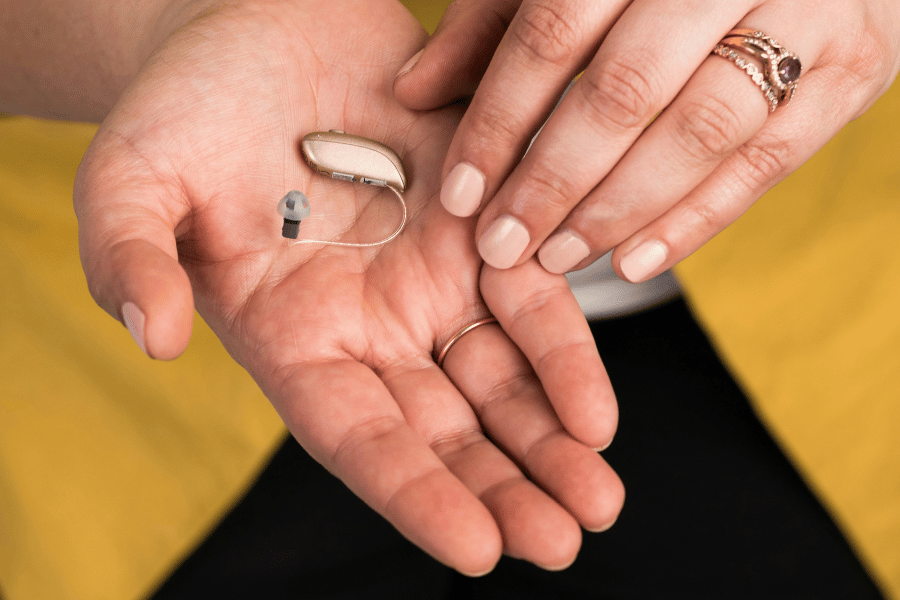
Your hearing aids sit in or behind your ears for 10–16 hours a day. They are exposed to earwax, skin oils, sweat, dust, and – if you live in Mumbai or anywhere along India’s coast – some of the highest humidity levels in the world.
Proper care is not optional. It directly determines how long your hearing aids last, how well they sound, and how often you need repairs. The good news: a simple daily routine of five minutes or less is all it takes.
This guide covers everything you need to know – from daily cleaning for each hearing aid type, to monsoon-specific protection, to the signs that it’s time to see your audiologist.
Clean your hearing aids every night when you remove them. Evening is better than morning because it gives the devices overnight to air dry.
These are the most common styles. The main body sits behind the ear; a tube or wire connects to an earmould or dome in the ear canal.
These custom-moulded devices sit entirely in the ear. Because the entire device is inside the ear canal, wax and moisture exposure is higher.
Moisture damage is cumulative. You may not notice any effect day to day, but over weeks and months, internal corrosion builds up – leading to intermittent sound, static, battery drain, and eventually component failure.
This section is critical for patients living in Mumbai, Goa, Kolkata, Chennai, and any coastal city in India. Standard international care guides are written for temperate climates with 40–60% humidity. Mumbai’s monsoon season (June–September) brings 85–95% humidity daily, along with sudden heavy rain, flooding, and persistent dampness.
During monsoon season, take these additional steps:
When choosing new hearing aids in India, ask about the IP (Ingress Protection) rating. An IP68 rating means the device is dust-tight and protected against submersion. Most premium 2026 hearing aids carry this rating, and in Mumbai’s climate, it is worth prioritising.
Rechargeable hearing aids:
Disposable battery hearing aids:
Never apply hair spray, perfume, or sunscreen while wearing hearing aids. Put these on first, let them dry, then insert your hearing aids
Schedule a professional check-up if you notice any of the following:
Even without problems, we recommend a professional cleaning and inspection every 4–6 months. At DEB’s Audiology, this service is included for all hearing aids fitted at our clinic.
With proper daily care and regular professional servicing, most hearing aids last 4–6 years. Some patients get 7+ years from well-maintained devices, although technology improvements may make an upgrade worthwhile before the device physically fails.
Factors that shorten lifespan: irregular cleaning, skipping dehumidifying routines, high earwax production, and exposure to Mumbai’s monsoon humidity without protection. Factors that extend lifespan: consistent daily cleaning, nightly dehumidifying, regular wax guard replacement, and periodic professional servicing.
At DEB’s Audiology, professional cleaning and inspection is included for all hearing aids fitted at our clinic. If your hearing aids need servicing – or if you’re due for a check-up – book an appointment.
Call or WhatsApp:
+91 88507 69404
Email: info@debsaudiology.com
Click to Chat